YOUR PROPERTIES EXPERTLY MANAGED
Colorado Estate Management Blog
The Truth About Colorado Landscapes: Why Winter Watering Isn't Optional
Andrew Beardsley
2/24/20265 min read

The Truth About Colorado Landscapes: Why Winter Watering Isn't Optional
By Colorado Estate Management | February 2026
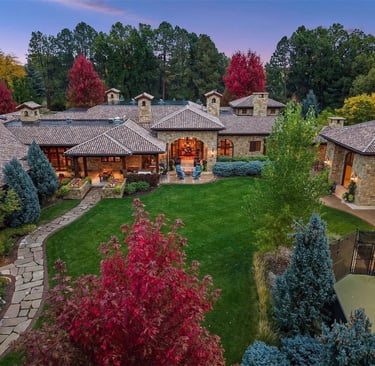
There's a persistent myth that those of us living along Colorado's Front Range inhabit a mountain landscape. Drive through any neighborhood from Fort Collins to Castle Rock, walk any tree-lined street in Cherry Hills Village, Boulder's Mapleton Hill, or Erie, and you're surrounded by maples, oaks, lindens, ornamental pears, and flowering crabapples. It's beautiful. It's lush. And almost none of it belongs here.
That's not a criticism — it's a reality that every property owner in Colorado needs to understand, because it changes everything about how you care for your landscape, especially in winter.
We Live on the Plains. Full Stop.
For the vast majority of Colorado's population, the mountains are a destination — not a home. The Front Range corridor, where most of us actually live, is the High Plains. Semi-arid. Windy. Prone to dramatic temperature swings that can drop 40 degrees in a matter of hours and then rocket back up three days later under a January sun that surprises people who've never experienced it.
The trees lining your street, shading your back patio, or anchoring your garden beds were planted by people. Every single one of them. From the foothills east to the Kansas border, the native landscape is dominated by grasses, sage, yucca, and cottonwoods clustered along waterways. The commanding Norway spruce in your front yard? Not from here. The gorgeous red maple blazing every October? Not from here. The ornamental cherry that stops traffic in April? Definitely not from here.
This matters because trees and shrubs native to other climates evolved with different expectations — more reliable rainfall, gentler temperature swings, and more forgiving winters. When we plant them here, we take on a responsibility. They are entirely dependent on us to bridge the gap between what nature provides in Colorado and what they need to survive and thrive.
In winter, nature provides almost nothing.
The Problem With Colorado Winters That Nobody Talks About
Most people assume that because temperatures drop, plants go dormant and need nothing. That's partially true — and dangerously incomplete.
Colorado winters are often dry. Not just dry — bone dry. We can go six, eight, or ten weeks without meaningful precipitation. And unlike the cold winters of the Midwest or Northeast, where snowpack blankets the ground and slowly releases moisture through freeze-thaw cycles, our Front Range winters frequently serve up something far more punishing: warm, sunny days with low humidity and persistent winds.
Those conditions pull moisture from the soil and from plant tissue itself, even when temperatures are cold. This process — called desiccation — is one of the leading causes of winter plant loss in Colorado landscapes, and most property owners never even realize it's happening. By the time spring arrives and a once-healthy tree fails to leaf out, the damage was done months earlier during a stretch of dry, windy January days that felt mild and harmless.
Now layer on what we've experienced over the past several years. Colorado has been locked in an extended drought cycle that has not meaningfully broken. The 2025 growing season was marked by exceptional heat, below-average rainfall, and an autumn that arrived warm and stayed that way far longer than normal. Heading into winter, most landscapes across the Front Range were already stressed. The soil moisture reserves that trees depend on through winter — accumulated during fall rains and early snowpack — simply weren't there.
The Stakes Are Higher Than You Think
If your landscape features any of the following, you have a real and immediate interest in winter watering:
Newly planted trees and shrubs from 2025. The general rule in horticulture is that a newly planted tree requires a full growing season for every inch of trunk diameter to establish its root system. A three-inch caliper tree? Three years before it's truly on its own. Plants installed in 2025 that experienced drought stress immediately are already behind in their first winter. Without intervention, many will not survive to see their second spring.
Any plant showing signs of stress. Scorched leaf edges, early fall color, premature leaf drop, sparse canopy — these are distress signals. A stressed tree heading into winter without adequate soil moisture is a tree fighting two battles at once. Most lose.
Mature trees that are irreplaceable. A 25-year-old oak or spruce represents decades of growth, tens of thousands of dollars in landscape value, and an aesthetic anchor that simply cannot be replicated on any reasonable timeline. Winter desiccation damage in mature trees often goes undetected until it's catastrophic.
Any property owner who cares about performance. Colorado's growing season is already compressed. Our last frost dates are late, our first fall frosts arrive early, and everything in between needs to count. Trees and shrubs that enter spring dehydrated spend the first weeks of the season recovering rather than growing. Winter watering doesn't just prevent loss — it sets the stage for a landscape that performs at its best from the first warm day forward.
How to Do It Right
Winter watering isn't complicated, but it does require intention. Here are the fundamentals:
Timing matters. Water only when temperatures are above 40°F, and the soil is not frozen. The best window is typically mid-morning on a mild day, so water has time to absorb before temperatures drop again in the evening. On the Front Range, these windows occur regularly throughout winter — don't wait for a warm stretch to pass, thinking another is coming. Use them.
Frequency. Established trees and shrubs generally need water once or twice per month during dry winter stretches. Newly planted material may need more frequent attention, particularly during extended dry and warm periods.
Slow and deep. The goal is to move water down to the root zone, not just wet the surface. Slow, deep watering with a soaker hose or low-flow method is far more effective than a quick spray. For established trees, focus on the drip line — the area beneath the outermost reach of the canopy — where the feeder roots are most active.
Volume. A general guideline is 10 gallons per inch of trunk diameter per watering. This isn't a rigid formula, but it gives you a useful starting point.
Don't forget evergreens. Spruce, pine, and juniper may look stoic in winter, but they lose moisture through their needles year-round. They are often the first plants to show winter desiccation damage and the last ones homeowners think to water.
Mulch is your ally. A three-to-four-inch layer of mulch extending to the drip line helps retain whatever soil moisture exists. If you haven't mulched, late fall or early winter is not too late to do so.
A Note on What This Is Really About
Managing a landscape in Colorado is an act of ongoing stewardship. The plants we've chosen to surround ourselves with — the trees that shade our homes, frame our views, and define the character of our neighborhoods — are here because we brought them here. That comes with a responsibility that doesn't pause when the calendar turns to November.
This winter, with drought conditions lingering and soil moisture deficits that many properties entered the season with, that responsibility is more acute than usual. Winter watering is not an extra step for the especially dedicated gardener. For a large portion of Front Range landscapes right now, it is the difference between a thriving spring and a painful one.
Consider what a mature, well-maintained landscape actually represents. The initial cost of quality landscaping is significant — design, installation, specimen trees, irrigation systems, and hardscape. But unlike a kitchen renovation or a new roof, a landscape compounds in value over time as plants mature, canopies fill in, and the overall composition reaches its intended vision. That embedded investment value is massive, and it can take years — sometimes decades — to recover from a single season of neglect. In that sense, a property's landscape sits alongside its hard assets in terms of what's at stake. It deserves to be managed accordingly.
Your landscape is an investment — in your property, in your enjoyment of it, and in the long-term vision you have for how that space looks and functions. Protect it year-round.
Colorado Estate Management provides comprehensive property care for discerning homeowners across Colorado's Front Range. For questions about your landscape's winter needs or to discuss a property management consultation, we'd welcome the conversation.
Fractional Estate Management
Service areas: Erie, Broomfield, Lafayette, Superior, Niwot, Longmont, Denver, Cherry Hills Village, and Boulder
YOUR HOME SHOULD ENHANCE YOUR LIFE, NOT COMPLICATE IT
Fractional estate management for busy professionals and discerning homeowners who want expert property care without the complexity of hiring full-time staff.
Andrew H. Beardsley Owner
© 2011-2026. All rights reserved